
第 1 課
What is a blockchain?
Infrastructure for today’s digital economy
A blockchain is a distributed ledger/database that's structured as sequential lists (or blocks) of transactions. Each new list includes the fingerprint of the previous list, linking them into an irreversible chain.
These lists of transactions or blocks are broadcasted to the network and verified by a set of computers (nodes). After a block is verified by all nodes, the transactions cannot be altered or deleted, making it a secure and trustless system.
Now, let’s go through an analogy that paints a clearer picture of why blockchains are useful.
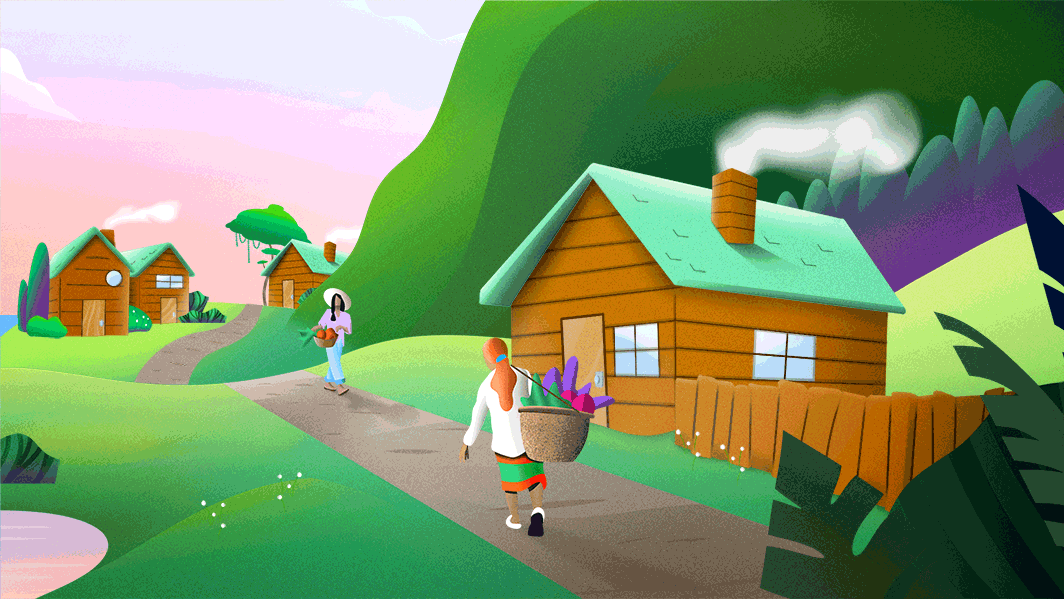 Long ago, the families that founded our community had to trade with each other to get the resources they needed. The milkman would trade milk for the farmer’s eggs, the hunter would trade meat for the tailor’s clothes, and so on.
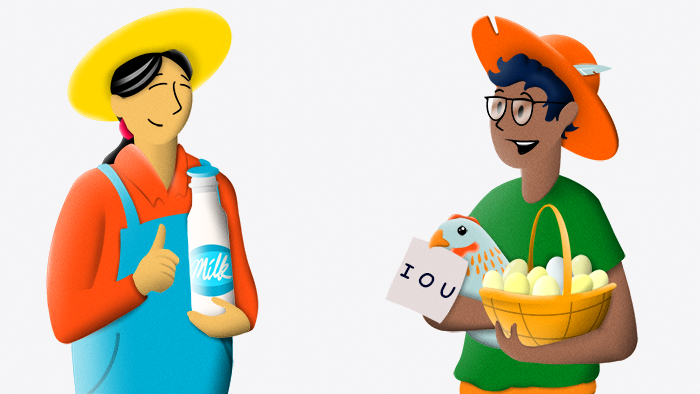
The confidence and trust between the craftsmen and farmers in our community began to grow, so they would make promises and IOUs. “I will give you two chickens now, and in return, you will give me six eggs next week.”
Long ago, the families that founded our community had to trade with each other to get the resources they needed. The milkman would trade milk for the farmer’s eggs, the hunter would trade meat for the tailor’s clothes, and so on.
The confidence and trust between the craftsmen and farmers in our community began to grow, so they would make promises and IOUs. “I will give you two chickens now, and in return, you will give me six eggs next week.”
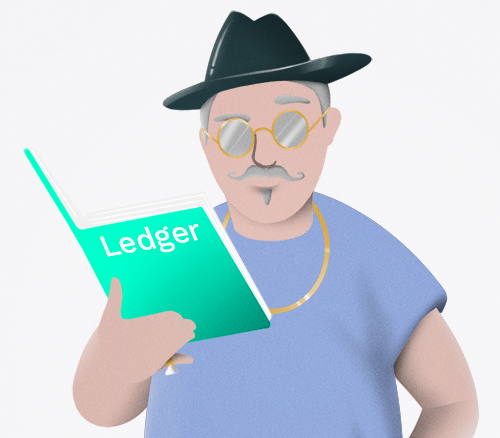
 But with so many promises being made, it became hard to keep track of who owed what to whom. So our community came up with a system to keep records of everyone’s credits—we appointed a “Ledger-Keeper” to keep track of all the promises made between the traders.
This system worked well for a while, but the Ledger-Keeper soon began to manipulate the system for his own benefit. He would charge a fee for every promise made, accept bribes to change the terms of agreements, and so on. This couldn’t continue.
But with so many promises being made, it became hard to keep track of who owed what to whom. So our community came up with a system to keep records of everyone’s credits—we appointed a “Ledger-Keeper” to keep track of all the promises made between the traders.
This system worked well for a while, but the Ledger-Keeper soon began to manipulate the system for his own benefit. He would charge a fee for every promise made, accept bribes to change the terms of agreements, and so on. This couldn’t continue.
 The community worked tirelessly to create a new system—one where EVERYONE had their own ledger. This public ledger system saw all trades occur at the community square, where each trade was recorded on a ledger held by each family.
Every Sunday, the entire community would gather together to compare ledgers and make sure everything tallied up. Sometimes, one family’s ledger would contain different information from the rest of the community. In this case, we would compare all ledgers to reach a consensus on which information was correct.
With everyone in the community having their own copy of the ledger, it became impossible for one person to manipulate the system. The community had finally found a way to trade fairly and securely.
The same principle applies to blockchain. It is a decentralized and distributed system that allows for secure, transparent, and tamper-proof transactions. In a blockchain, real world assets can be represented as well as currencies, the most common application.
The community worked tirelessly to create a new system—one where EVERYONE had their own ledger. This public ledger system saw all trades occur at the community square, where each trade was recorded on a ledger held by each family.
Every Sunday, the entire community would gather together to compare ledgers and make sure everything tallied up. Sometimes, one family’s ledger would contain different information from the rest of the community. In this case, we would compare all ledgers to reach a consensus on which information was correct.
With everyone in the community having their own copy of the ledger, it became impossible for one person to manipulate the system. The community had finally found a way to trade fairly and securely.
The same principle applies to blockchain. It is a decentralized and distributed system that allows for secure, transparent, and tamper-proof transactions. In a blockchain, real world assets can be represented as well as currencies, the most common application.
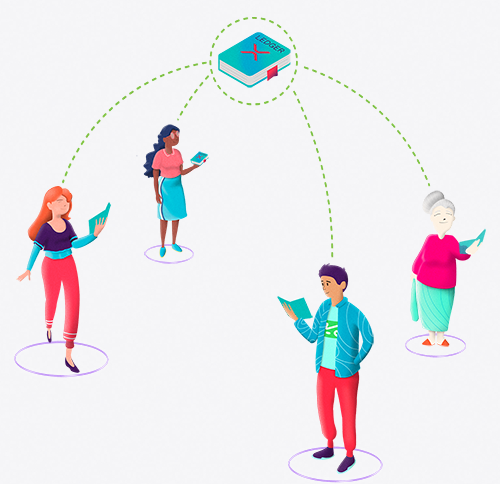
A simple blockchain analogy – community beginnings
Long ago, the families that founded our community had to trade with each other to get the resources they needed. The milkman would trade milk for the farmer’s eggs, the hunter would trade meat for the tailor’s clothes, and so on.
The confidence and trust between the craftsmen and farmers in our community began to grow, so they would make promises and IOUs. “I will give you two chickens now, and in return, you will give me six eggs next week.”
But with so many promises being made, it became hard to keep track of who owed what to whom. So our community came up with a system to keep records of everyone’s credits—we appointed a “Ledger-Keeper” to keep track of all the promises made between the traders.
This system worked well for a while, but the Ledger-Keeper soon began to manipulate the system for his own benefit. He would charge a fee for every promise made, accept bribes to change the terms of agreements, and so on. This couldn’t continue.
The community worked tirelessly to create a new system—one where EVERYONE had their own ledger. This public ledger system saw all trades occur at the community square, where each trade was recorded on a ledger held by each family.
Every Sunday, the entire community would gather together to compare ledgers and make sure everything tallied up. Sometimes, one family’s ledger would contain different information from the rest of the community. In this case, we would compare all ledgers to reach a consensus on which information was correct.
With everyone in the community having their own copy of the ledger, it became impossible for one person to manipulate the system. The community had finally found a way to trade fairly and securely.
The same principle applies to blockchain. It is a decentralized and distributed system that allows for secure, transparent, and tamper-proof transactions. In a blockchain, real world assets can be represented as well as currencies, the most common application.
What does it mean to be distributed and decentralized?
A blockchain is decentralized because there is no central authority that controls the network. Instead, the network is powered by a global community of users who work together to verify and approve transactions. Anyone can join and participate in a public blockchain. Distributed means that the ledger is not stored in one central location that can be hacked or manipulated. Instead, it is spread out across multiple computers (nodes) around the world.